1925 – 2016 · Varanasi, India

Ram Chandra
Shukla

राम चंद्र शुक्ल

Pioneer of Samikshavad · Founder of Kashi Shailee · Art Philosopher

A painter who saw Varanasi not as backdrop but as breath — Ram Chandra Shukla spent half a century translating the spiritual pulse of the Ganga ghats into ink, wash, and line. As Professor and Head of the Department of Painting at Banaras Hindu University, he did not merely teach art; he articulated a philosophy of seeing.

Scroll

A Life in Devotion

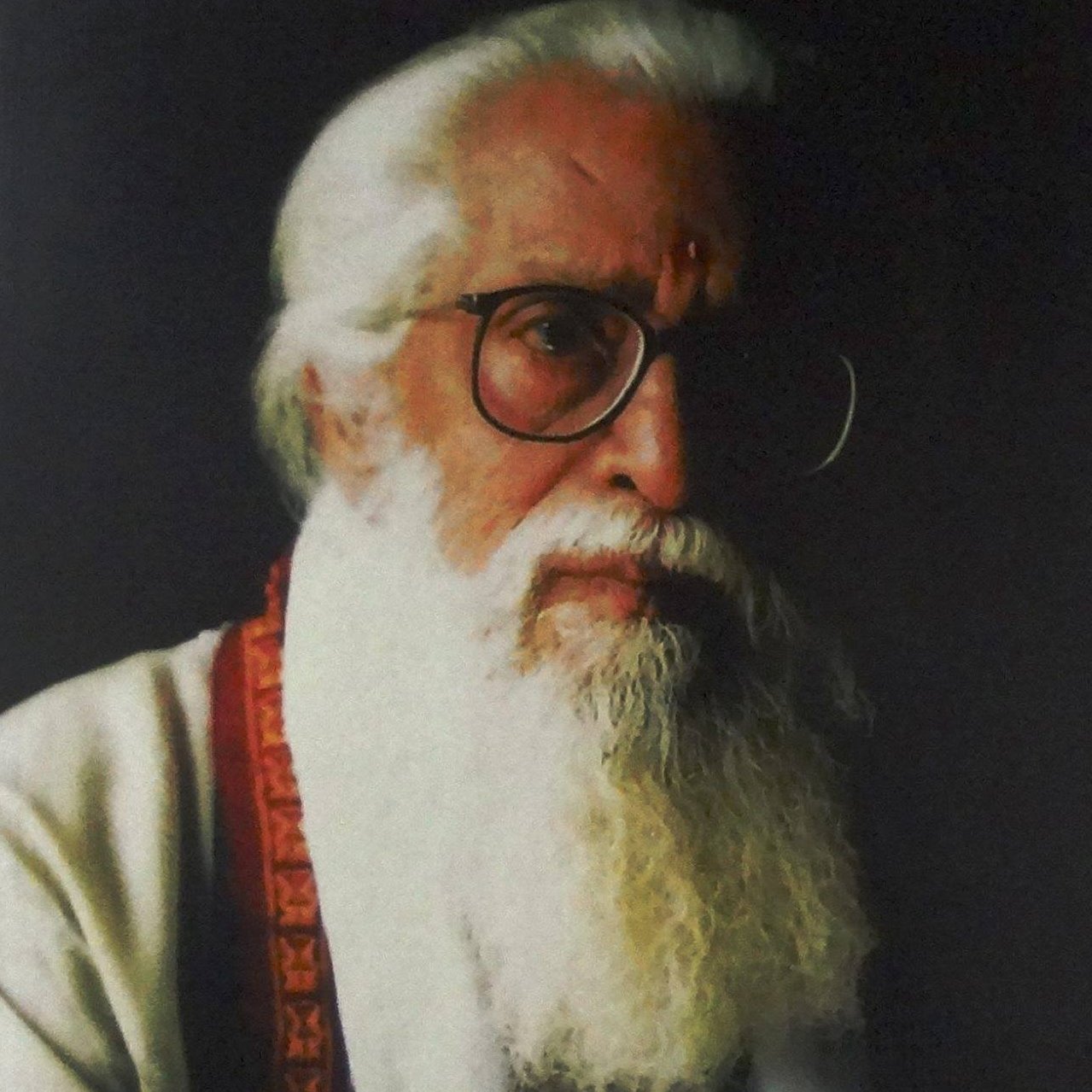
Ram Chandra Shukla — Indian painter, art philosopher and Professor at Banaras Hindu University, Varanasi (1925–2016)

Ram Chandra Shukla 1925 — 2016

Born 1925, Uttar Pradesh
Died 2016, Varanasi
Institution Banaras Hindu University
Movements Founded Kashi Shailee, Samikshavad
Books Published Six major works on art philosophy
1925
Birth in Uttar Pradesh
Born into a milieu steeped in the cultural traditions of North India, Ram Chandra Shukla's early years were shaped by the devotional arts, folk traditions, and the sacred geography of the Ganga basin — a formative geography that would never leave his work.
Late 1940s
Education at Allahabad University
His formal artistic education at Allahabad — then a major intellectual centre of northern India — exposed him to both the classical canons of Indian art and the emerging currents of modernism. He emerged with a rigorous technical foundation and a questioning philosophical mind.
1950s
Arrival at Banaras Hindu University
Ram Chandra Shukla joined the Department of Painting at BHU, where he would spend the remainder of his professional life. Varanasi, with its ancient ghats, its musicians and cremation pyres, its scholars and wandering sadhus, became both subject and philosophical engine of his art.
1950s–60s
Development of Kashi Shailee
Drawing from Varanasi's folk idioms, ritual imagery, and the wash techniques of Indian miniature painting, Ram Chandra Shukla developed a distinctive regional style: Kashi Shailee. The approach married the intimacy of miniature with the symbolic vocabulary of everyday spiritual life.
1974
Founding of Samikshavad
A watershed moment in Indian modern art history: Ram Chandra Shukla formally articulated Samikshavad — a movement of critical, socially engaged painting rooted in indigenous modernist sensibility. Neither imported abstraction nor sentimental traditionalism, it insisted on a third way: art as philosophical critique from within.
Head of Department
Professor and Institutional Leader
As Professor and Head of the Department of Painting at BHU, Ram Chandra Shukla shaped an entire generation of Indian artists. His pedagogy combined rigorous formal training with philosophical inquiry, refusing to separate the technical from the spiritual.
2005 onwards
Intuitive Miniature Works
In his later years, Ram Chandra Shukla turned inward. His marker and sketch-pen works on paper grew smaller in scale and vast in spiritual resonance — intensely personal records of inner states, conversations between the artist and silence.
2016
Passing in Varanasi
Ram Chandra Shukla passed away in the city that had defined him, leaving behind a body of work, a philosophical legacy, and a school of thought that continues to influence Indian art discourse.

Ram Chandra Shukla · 1925 — 2016

Kashi — City of Light

काशी — प्रकाश की नगरी

For Ram Chandra Shukla, Varanasi was not a scenic backdrop — it was an artistic philosophy made physical. The stepped ghats, the pre-dawn aarti, the geometry of temple spires against the river — these were not subjects to paint but structures of consciousness to inhabit.

काशी केवल नगर नहीं — वह एक दृष्टि है।

Three Philosophies
of Seeing

Over six decades, Ram Chandra Shukla developed, named, and inhabited three distinct but interrelated modes of artistic inquiry — each a deepening of the last, each inseparable from the spiritual geography of Varanasi.

Movement I
Kashi
Shailee
Wash Technique Folk Idiom Varanasi
A regional style born of the ghats — Kashi Shailee weds the intimate scale of Indian miniature painting with the living visual traditions of Varanasi. Ram Chandra Shukla drew on ritual imagery, processions, the geometry of temple steps, and the quality of light on the Ganga at dawn to forge a style at once local and universal. The wash technique creates luminous, layered surfaces where form emerges gradually, like memory surfacing through water.
Movement II
Samikshavád
Critical Painting Indigenous Modernism Symbol
Founded formally in 1974, Samikshavad — loosely translated as "critical aestheticism" — proposed that Indian modernism need not mimic Western abstraction nor retreat into revivalist sentimentality. Through symbolic composition, Ram Chandra Shukla engaged with social and political realities through an indigenous visual language. Form and content became inseparable; the painting itself was an act of critique.
Movement III
Intuitive
Miniatures
Marker & Pen Introspective Late Period
In the final decade of his practice, Ram Chandra Shukla's work contracted in scale and expanded in depth. These intimate works on paper — made with marker and sketch pen — read as visual diaries of inner states: meditative, sometimes ecstatic, always personal. The miniature format was chosen not for tradition's sake but because it suited the register of whispered revelation. Scale became spiritual choice.

A Philosopher's
Library

Ram Chandra Shukla's written work is as significant as his painting — together, the two bodies of work constitute a complete philosophical system. His books, composed in Hindi, brought a rigorous aesthetic discourse to Indian readers at a time when such writing in vernacular languages was rare.

1951
रेखावली
Rekhawali
His earliest major published work — a collection of drawings and commentary that announced a distinct artistic personality. Rekhawali established Ram Chandra Shukla's conviction that line itself carries philosophical weight, that the act of drawing is an act of thought made visible.
1958
नवीन भारतीय कला शिक्षण पद्धति
Naveen Bhartiya Kala Shikshan Padhatti
A landmark pedagogical text proposing a reformed approach to art education in independent India. Ram Chandra Shukla argued that post-colonial Indian art education must escape the colonial inheritance of European academic training without retreating to mere imitation of classical Indian forms.
1962
चित्रकला का रसास्वादन
Chitrakala ka Rasaswadan
An aesthetic treatise drawing on the classical Indian concept of rasa — the theory of emotional essence in art — and applying it to the experience of visual painting. This work bridges Sanskrit aesthetic philosophy and contemporary art criticism in a synthesis that remains singular.
1964
कला का दर्शन
Kala Ka Darshan
The Philosophy of Art — Ram Chandra Shukla's most comprehensive theoretical statement. A systematic examination of what art is, what it does, and how it relates to the spiritual and moral life of a society. Written with lucid rigour, it remains essential reading in Hindi-medium art education.
1965
कला प्रसंग
Kala Prasang
A more discursive, essayistic work — meditations on specific paintings, movements, and questions of artistic practice. Kala Prasang reveals Ram Chandra Shukla the conversationalist: learned, curious, unafraid of contradiction, always returning to the question of what painting is for.
Later Period
कला और आधुनिक प्रवित्यन
Kala Aur Aadhunik Pravityan
Art and Modern Tendencies — a critical survey of modernity as it manifested in Indian visual culture. Ram Chandra Shukla interrogates what it means to be a modern Indian artist without surrendering to either colonial aesthetics or defensive nationalism, arguing for an art that is critically situated and culturally rooted.

What Endures

Ram Chandra Shukla's legacy is not simply a collection of artworks or titles. It is a method of looking — a disciplined, spiritually attentive, socially conscious practice of seeing that he forged over decades and transmitted to hundreds of students, readers, and viewers.

Art Pedagogy
As Head of Painting at BHU, Ram Chandra Shukla shaped a generation of Indian artists and teachers. His pedagogy insisted that technical mastery and philosophical depth are inseparable — a standard that redefined teaching norms.
Samikshavad Today
In an era of globalised art markets and cultural homogenisation, Samikshavad's insistence on a critical, rooted Indian modernism is more relevant than ever. It offers a vocabulary of resistance.
Written Legacy
His six books in Hindi brought a rigorous aesthetic philosophy to Indian vernacular readers. They remain foundational texts in art education, placing Ram Chandra Shukla among the significant art writers of the 20th century.
Varanasi as Method
Ram Chandra Shukla demonstrated that a place — fully inhabited, deeply studied — can become an artistic philosophy. Kashi Shailee is not a regional style; it is an argument about how geography and spirit intersect in great art.
6 Major Books
50+ Years at BHU
1974 Samikshavad Founded

Scholars interested in Ram Chandra Shukla's contribution to Indian modernism will find primary sources at the BHU Department of Fine Arts archive and the Allahabad Museum. His books remain in circulation through Hindi academic publishers.

Department of Painting, Faculty of Visual Arts, Banaras Hindu University, Varanasi – 221005, Uttar Pradesh, India.

Articles & Research

Scholarly perspectives on Indian modern art, the Varanasi painting tradition, and the philosophical movements that Ram Chandra Shukla pioneered — for researchers, collectors, and those new to Indian art history.

Indian Art History

History of Indian Modern Art — From Bengal School to Samikshavad

Indian modern art did not begin with Western influence — it began with a question: what does it mean to paint as an Indian in the modern world? From Abanindranath Tagore's Bengal School revival to the Progressive Artists' Group of Bombay and Ram Chandra Shukla's Samikshavad in Varanasi, each movement navigated the tension between inherited tradition and contemporary urgency. Shukla's contribution was to insist that modernism could be indigenous — that Varanasi itself was a modernist proposition.

Art Philosophy

What is Samikshavad? Ram Chandra Shukla's Philosophy of Critical Painting

Samikshavad — founded formally in 1974 — proposed a third path for Indian painting: neither the mimicry of Western abstraction nor the nostalgia of revivalism. Rooted in Sanskrit aesthetic theory and the living traditions of Varanasi, it insisted that the painted surface could function as philosophical critique. For Ram Chandra Shukla, every mark was an argument, every composition a position. Samikshavad remains one of the most rigorous art-philosophical frameworks produced by an Indian artist in the twentieth century.

Varanasi Heritage

Varanasi in Indian Painting — A Tradition of Sacred Seeing

Varanasi — Kashi, the City of Light — has been a subject of Indian painting for centuries. The ghats, the pre-dawn aarti, the pilgrims, the Ganga at dusk: these are not merely scenic subjects but carriers of spiritual meaning. Ram Chandra Shukla's Kashi Shailee represents the most philosophically developed treatment of Varanasi in modern Indian art — transforming the city from backdrop into method. His wash technique captures the quality of light on the river in a way that no photograph can approximate.

Spiritual Art

Indian Spiritual Art Traditions — From Miniature to Modern

The thread connecting Indian miniature painting to the spiritual art of the twentieth century runs through the concept of rasa — the aesthetic emotion that transforms viewer and artwork alike. Ram Chandra Shukla's treatise Chitrakala ka Rasaswadan (1962) applied classical rasa theory to the experience of modern Indian painting, creating a bridge between Sanskrit aesthetics and contemporary art criticism. This engagement with spiritual tradition was never nostalgic — it was rigorously analytic and forward-looking.

Collector's Guide

How to Buy Authentic Indian Paintings — A Collector's Guide

Acquiring original Indian paintings requires an understanding of provenance, medium, period, and the institutional history of the work. For works by artists associated with major institutions like Banaras Hindu University's Department of Painting, documentation includes faculty records, exhibition catalogues, and period photographs. A serious collector should seek works with clear chain of custody, preferably through academic estates or institutional archives. The most significant Indian modern paintings were produced in university environments — not commercial studios — and their authentication requires scholarly rather than purely market-based approaches.

Technique & Style

Kashi Shailee — The Wash Technique of Varanasi Painting

The wash technique at the core of Kashi Shailee involves building luminous, layered surfaces through repeated dilute applications of pigment — a process that mirrors the way light accumulates on water at dawn. Ram Chandra Shukla drew on the tradition of Indian miniature painting, where the relationship between line and wash is fundamental, and adapted it to the scale and subject matter of Varanasi's spiritual geography. The result is a style in which form seems to emerge from light rather than to interrupt it — a quality that gives Kashi Shailee works an unmistakable meditative quality distinct from any other regional Indian painting tradition.
Acquire Original Paintings

Collectors, academic institutions, and cultural foundations seeking to acquire original works by Ram Chandra Shukla are invited to submit inquiries through this form. The estate maintains a curated archive of paintings, drawings, and works on paper spanning six decades of practice — from oil works of the Kashi Shailee period to the late intuitive miniatures.

Available Work Categories

Kashi Shailee — oil and wash works, 1950s–1980s
Samikshavad — mixed media, 1970s–1990s
Intuitive Miniatures — marker and sketch pen on paper, 2000s–2016
Drawings & Studies — archival works on paper

This form is for genuine collector and institutional inquiries. All submissions are reviewed by the estate. Your information will not be shared with third parties. Responses are provided within ten working days.

"Your inquiry has been received. The estate will respond within ten working days."